The Field, the Vineyard, and the Fig Tree

A tree growing in a vineyard

AI-generated content may be incorrect.

God, the supreme Husbandman, has revealed His divine wisdom through three distinct metaphors—each illustrating the present condition of the Church, the Jewish Nation, and the Gentile world.

The Gentile nations are portrayed as His field. As Scripture affirms in Matthew 13:38, “The field is the world.” From the outset, the Lord identifies the world as the soil into which He sows His word, the Lord being the Sower. In this sacred planting, the Word of God is cast like seed upon the nations, taking root where hearts are prepared to receive it.

The vineyard, once entrusted to the Jewish Nation, has now been given to the Church. This transfer was not arbitrary, but the result of a solemn forfeiture—when the leaders of Israel rejected their Messiah and crucified the Lord of glory. Thus, the stewardship of the vineyard passed into new hands, not by merit, but by divine appointment, that the fruit of righteousness might yet be cultivated.

Mat 21:39-43  And they caught him, and cast him out of the vineyard, and slew him.  40  When the lord therefore of the vineyard cometh, what will he do unto those husbandmen?  41  They say unto him, He will miserably destroy those wicked men, and will let out his vineyard unto other husbandmen, which shall render him the fruits in their seasons.  42  Jesus saith unto them, Did ye never read in the scriptures, The stone which the builders rejected, the same is become the head of the corner: this is the Lord’s doing, and it is marvellous in our eyes?  43  Therefore say I unto you, The kingdom of God shall be taken from you, and given to a nation bringing forth the fruits thereof.

The Lord describing the vine, that was once the Jewish nation, now as the New Testament Church.

Isa 5:1-7  Now will I sing to my wellbeloved a song of my beloved touching his vineyard. My wellbeloved hath a vineyard in a very fruitful hill:  2  And he fenced it, and gathered out the stones thereof, and planted it with the choicest vine, and built a tower in the midst of it, and also made a winepress therein: and he looked that it should bring forth grapes, and it brought forth wild grapes.  3  And now, O inhabitants of Jerusalem, and men of Judah, judge, I pray you, betwixt me and my vineyard.  4  What could have been done more to my vineyard, that I have not done in it? wherefore, when I looked that it should bring forth grapes, brought it forth wild grapes?  5  And now go to; I will tell you what I will do to my vineyard: I will take away the hedge thereof, and it shall be eaten up; and break down the wall thereof, and it shall be trodden down:  6  And I will lay it waste: it shall not be pruned, nor digged; but there shall come up briers and thorns: I will also command the clouds that they rain no rain upon it.  7  For the vineyard of the LORD of hosts is the house of Israel, and the men of Judah his pleasant plant: and he looked for judgment, but behold oppression; for righteousness, but behold a cry.

Joh 15:5  I am the vine, ye are the branches: He that abideth in me, and I in him, the same bringeth forth much fruit: for without me ye can do nothing. 

The Transfer of the Vineyard: The Role of the Holy Spirit in Bearing Fruit

The Jewish nation, having failed to produce the fruits that God, the Husbandman, required, lost its stewardship over the vineyard. As a result, this responsibility was transferred to a new group, those who possess the Holy Spirit. This divine transition ensures that the vineyard will now yield the fruit God seeks. The guarantee lies in the presence of His Son within the vineyard itself, for Christ is the true vine. He alone is responsible for supplying spiritual nourishment to the branches, making certain they have all they need to flourish and bear fruit.

This time, the vineyard will indeed produce fruit. Importantly, the outcome no longer depends on human effort or merit, but solely on the work of the Holy Spirit within each believer, as emphasized in Galatians 5:22. Even if some believers grieve the Holy Spirit, as warned in Ephesians 4:30, there will still be those who yield the fruit that God the Father desires. This truth is further underscored by the warning that unfruitful branches will be removed from the vine, as stated in John 15:2 and 15:6. Therefore, the fruitful harvest in the vineyard is secured by the active presence and work of the Holy Spirit in the lives of believers.

The Fig Tree: A Symbol of the Law and Israel’s Righteousness

The question arises: if the Jewish nation was once considered the vineyard and that stewardship has now been removed, does this mean that God has completely rejected Israel as a nation? The answer is a resounding no. Even the Apostle Paul firmly refutes such an idea in Romans 11:1.

The fig tree has served as a symbol of the law from the very beginning. In the book of Genesis, Adam and Eve used fig leaves to cover their nakedness after their eyes were opened to their sin.

Gen 3:7  And the eyes of them both were opened, and they knew that they were naked; and they sewed fig leaves together, and made themselves aprons. 

Our first parents in trying to hide their nakedness, inadvertently began the downward spiral of covering their sin with manmade covering. God had to set the record straight when he provided the coats of skins, showing that innocent life must be killed to provide the covering. The innocent for the unjust.

This introduction of the first covering was man’s attempt to hide from a Holy God, and a picture of their own righteousness. We see that the firstborn son, Cain, learned nothing when he tried to bring to God of the fruit of the ground; Gen 4:3. Of which God would not receive; Gen 4:5. Why? Because it was of his own hands and not with blood.

This is in type the Mosaic Law. It was given to the Nation of Israel to be their own righteousness. It was due to transgression;

The Significance of Coverings: From Fig Leaves to Sacrifice

Man’s Attempt to Cover Sin

When Adam and Eve first became aware of their nakedness, they attempted to conceal it by fashioning coverings out of fig leaves. This act represented humanity’s initial effort to address sin through self-made means, relying on the word of their hands to hide from a holy God. However, this solution was insufficient, as it failed to address the true nature of their transgression.

God’s Provision: The Coats of Skins

To correct this, God provided coats of skins for Adam and Eve, demonstrating that innocent life must be sacrificed to adequately cover sin. This act established a foundational principle: “the innocent given in place of the guilty”. The exchange foreshadowed the necessity of a greater, divinely appointed sacrifice for the redemption of humanity.

The Lesson Lost: Cain’s Offering

This principle was lost on Cain, the firstborn son, who attempted to present an offering to God consisting of the fruit of the ground. God did not accept Cain’s offering because it was the product of his own labor, not of faith, lacking the required element of blood sacrifice. This rejection highlighted the inadequacy of human efforts to achieve righteousness apart from God’s prescribed means.

The Mosaic Law: A Type of Self-Righteousness

The Mosaic Law, given to the Nation of Israel, served as a form of self-righteousness. Its introduction was a response to transgression, God providing a system by which the people could attempt to meet His standards. Yet, as demonstrated from the earliest interactions with God, true righteousness requires more than human effort—it demands the sacrifice that only God can provide.

Gal 3:19  Wherefore then serveth the law? It was added because of transgressions, till the seed should come to whom the promise was made; and it was ordained by angels in the hand of a mediator. 

The law allowed them to come before God. It was only made for the nation of Israel. It was meant to be temporal until the new covenant came about. A school master, a teacher, preparing us for the final solution to sin, found in the righteousness of God in Christ.

Deu 6:24-25  And the LORD commanded us to do all these statutes, to fear the LORD our God, for our good always, that he might preserve us alive, as it is at this day.  25  And it shall be our righteousness, if we observe to do all these commandments before the LORD our God, as he hath commanded us.

Rom 3:20-22  Therefore by the deeds of the law there shall no flesh be justified in his sight: for by the law is the knowledge of sin.  21  But now the righteousness of God without the law is manifested, being witnessed by the law and the prophets;  22  Even the righteousness of God which is by faith of Jesus Christ unto all and upon all them that believe: for there is no difference:

Gal 3:23-25  But before faith came, we were kept under the law, shut up unto the faith which should afterwards be revealed.  24  Wherefore the law was our schoolmaster to bring us unto Christ, that we might be justified by faith.  25  But after that faith is come, we are no longer under a schoolmaster.

This divine sequence is evident even in the earliest biblical narratives: first, the works of man are presented, as seen in the fig leaves used by Adam and Eve, followed by God’s provision of coats of skins, symbolizing the necessity of the sacrifice that only God can provide. The pattern continues with the works of man through the Mosaic Law and ultimately with the redemptive work of Christ. The fig tree itself becomes a fitting symbol, representing the spiritual state of Israel in both past and future contexts.

Parables of the Fig Tree

The Lord Jesus employs the fig tree as a significant and recurring symbol to illustrate the spiritual condition of Israel.

Through a series of parables, Jesus reveals to His disciples both the present and the future state of Israel. These parables are carefully chosen to reflect not only the nation’s immediate response during His earthly ministry but also to foreshadow what lies ahead. The first instance of this parabolic imagery appears late in Christ’s ministry, as recorded in the Gospel of Luke. At this point, Jesus has spent nearly three years ministering, teaching, and calling Israel to repentance, making the symbolism of the fig tree especially poignant as a warning to the nation that their time for repentance was running out.

Luk 13:6-9  He spake also this parable; A certain man had a fig tree planted in his vineyard; and he came and sought fruit thereon, and found none.  (7)  Then said he unto the dresser of his vineyard, Behold, these three years I come seeking fruit on this fig tree, and find none: cut it down; why cumbereth it the ground?  (8)  And he answering said unto him, Lord, let it alone this year also, till I shall dig about it, and dung it:  (9)  And if it bear fruit, well: and if not, then after that thou shalt cut it down.

This parable is a direct reference to the nation as a whole. Whether the disciples , at the time, understood it or not, the reader is left with the understanding that Christ was now three years into his ministry. The nation is called to repent or face the judgment of God. The “dresser” of the vineyard is Jesus and he is making intercession unto the Father to allow the tree to continue another season after applying the proper fertilizer. Did the nation of Israel repent at the preaching of “The kingdom of God is at hand.”? The next time a fig tree is mentioned is the next season after Christ’s triumphant entry into Jerusalem, before his passion.

At the time, it is uncertain whether the disciples fully grasped the significance, but the message to the reader is evident: Jesus was now three years into His ministry. During this period, the nation was being called to repentance, with a clear warning that failure to do so would result in God’s judgment.

In the parable, the “dresser” of the vineyard represents Jesus Himself. He intercedes with the Father, requesting that the fig tree be given one more season to bear fruit after He applies the necessary care and fertilizer. This illustrates Christ’s intercession to the Father for mercy and additional opportunity for Israel to repent.

The critical question emerges: Did the nation of Israel respond in repentance to the preaching, “The kingdom of God is at hand”? The answer becomes apparent as the narrative continues. The next mention of a fig tree occurs in the following season, after Christ’s triumphal entry into Jerusalem and just prior to His passion, further emphasizing the nation’s response to His call.

Mat 21:18-19  Now in the morning as he returned into the city, he hungered.  (19)  And when he saw a fig tree in the way, he came to it, and found nothing thereon, but leaves only, and said unto it, Let no fruit grow on thee henceforward for ever. And presently the fig tree withered away.

The Fig tree still baren, even after Christ spent another season preaching the Kingdom of God and repentance. Now judgment is fallen. The “axe is laid at the root of the trees”; Luke 3:9. Christ will make the final declaration of Judgment to make it official. The nation is doomed.

Mat 23:37-39  O Jerusalem, Jerusalem, thou that killest the prophets, and stonest them which are sent unto thee, how often would I have gathered thy children together, even as a hen gathereth her chickens under her wings, and ye would not!  (38)  Behold, your house is left unto you desolate.  (39)  For I say unto you, Ye shall not see me henceforth, till ye shall say, Blessed is he that cometh in the name of the Lord.

The fulfillment of the murder of God’s Son and the Judgment of the wicked husbandmen, and the taking away of the vineyard is now written with an iron pen.

But the nation of Israel is not without hope because the final mention of the fig tree is one of redemption. In referring to the last days prior to the second advent of Christ, he gives the parable of the fig tree.

Mat 24:32-34  Now learn a parable of the fig tree; When his branch is yet tender, and putteth forth leaves, ye know that summer is nigh:  (33)  So likewise ye, when ye shall see all these things, know that it is near, even at the doors.  (34)  Verily I say unto you, This generation shall not pass, till all these things be fulfilled.

The fig tree, though cut down is, with its root, still alive. We see how God had dealt with the leader of the nation of Babylon. Nebuchadnezzar’s second vision is of the tree that was cut down but cared for in a way that kept it alive.

Dan 4:10-15  Thus were the visions of mine head in my bed; I saw, and behold a tree in the midst of the earth, and the height thereof was great.  (11)  The tree grew, and was strong, and the height thereof reached unto heaven, and the sight thereof to the end of all the earth:  (12)  The leaves thereof were fair, and the fruit thereof much, and in it was meat for all: the beasts of the field had shadow under it, and the fowls of the heaven dwelt in the boughs thereof, and all flesh was fed of it.  (13)  I saw in the visions of my head upon my bed, and, behold, a watcher and an holy one came down from heaven;  (14)  He cried aloud, and said thus, Hew down the tree, and cut off his branches, shake off his leaves, and scatter his fruit: let the beasts get away from under it, and the fowls from his branches:  (15)  Nevertheless leave the stump of his roots in the earth, even with a band of iron and brass, in the tender grass of the field; and let it be wet with the dew of heaven, and let his portion be with the beasts in the grass of the earth:

A temporary judgment. Not totally destroyed but left as a stump with a “band of iron and brass”.

The scripture tells us that the sown fig leaves was a covering that Adam and Eve had made with their own hands; Gen 3:7. The Law was considered the works and righteousness of the nation of Israel. They were to “do all these statutes” that in doing God , “might preserve us alive” and again “it shall be our righteousness”. Just as our first parents thought that the fig leaves would cover their sins, even now, man thinks that keeping of commandments will protect against the judgment of a Holy God. Paul warns against such false covers.

Rom 3:20  Therefore by the deeds of the law there shall no flesh be justified in his sight: for by the law is the knowledge of sin. 

The fig leaves was a sign of their sin, even as the law is a reminder of ours today. Paul did not want to be bound by that form of self-righteousness.

Php 3:9  And be found in him, not having mine own righteousness, which is of the law, but that which is through the faith of Christ, the righteousness which is of God by faith: 

The Fig Tree and the Nation of Israel: Parabolic Insights

The Significance of the Fig Tree Putting Forth Leaves

The sign of the fig tree “putting forth leaves” this author interprets as the nation of Israel re-emerging into national prominence, particularly as it seeks to restore the Mosaic laws and practices. This revival implies the reinstatement of blood sacrifices, which in turn necessitates the existence of a temple.

The Parables: Field, Vineyard, and Fig Tree

When considering the parables of the field, vineyard, and fig tree together, a comprehensive perspective emerges. Even in a world marked by sin and rebellion, a world that is moving toward a final confrontation with the divine, there remains a remnant preserved by God. The imagery describes a vast field, within which lies a small vineyard surrounded by wild beasts, and even within this vineyard stands a solitary tree. This presents a picture of an oasis in a barren region.

This theme is echoed in another of Christ’s parables, where a man discovers a hidden treasure in a field. To secure his ownership, he purchases the entire field with the intention of returning to claim the treasure. This parable, referenced in Matthew 13:34, is believed to symbolize Israel, as supported by Exodus 19:5.

Conclusion

Since the primary focus here is on the Field, Vineyard, and Fig Tree, further exploration is left to the reader. These parables collectively offer profound insights into God’s preservation of a remnant of both the elect of the Church of God and Israel and even of the gentiles.

2Ti 2:15  Study to shew thyself approved unto God, a workman that needeth not to be ashamed, rightly dividing the word of truth. 

Three Doctrinal Distinctions the Church Has Forgotten**

By Lacy Evans

Rightly Dividing the Words of Truth:

Three Doctrinal Distinctions the Church Has Forgotten**

The apostle Paul commanded believers to “hold fast the form of sound words” (2 Tim. 1:13). Sound doctrine requires precision, and precision requires distinguishing terms which God Himself distinguishes. Over centuries—especially in the modern church—crucial biblical concepts have been merged, blurred, or sanitized, resulting in confusion about the afterlife, the kingdom, and salvation itself.

This essay restores three key distinctions:

1. Hell (Hades/Sheol) vs. the Lake of Fire

2. Heaven vs. the Kingdom (Kingdom of Heaven/God)

3. The free gift of salvation vs. the prize/inheritance/reward

Each distinction is necessary not only for doctrinal clarity but for spiritual health, exhortation, and obedience.

I. HELL AND THE LAKE OF FIRE: TWO DISTINCT REALMS

Modern preaching often conflates “hell” with “the lake of fire,” yet Scripture could not speak more plainly:

Hell cannot be the lake of fire if Hell is thrown into it.

“Death and Hell were cast into the lake of fire. This is the second death.” (Rev. 20:14)

1. Hell as the Present Underworld

In Scripture “hell” (KJV) translates various contexts of Sheol/Hades, the unseen world of the dead containing multiple chambers. Robert Govett, in Hades, insists on this exact distinction:

“Hades is not the place of final punishment… It is the invisible world that receives departed spirits until the resurrection.” “Within Hades are regions both of joy and of sorrow… Paradise on the one hand, and torment on the other.” (Govett, Hades, pp. 19–23)

Govett also affirms the plurality of compartments:

“There are depths of Hades— ‘the lowest Hades’—as well as Paradise above.” (p. 27)

Scripture likewise presents:

• Paradise (Luke 23:43; Luke 16:22, Abraham’s bosom)

• Torments (Luke 16:23)

• The Pit (Isa. 14:15)

• The Bottomless Pit/Abyss (Rev. 9:1–2; Luke 8:31)

• Tartarus—place of bound angels (2 Pet. 2:4)

• The Grave as a usage of “Sheol” at times

Hell is thus a temporary holding realm, not the eternal state.

2. The Lake of Fire as the Final, Eternal Judgment

The Lake of Fire is a distinct eschatological reality. Govett writes:

“The lake of fire belongs not to the intermediate state, but to the eternal… It is the doom prepared for the devil and his angels.” (Hades, p. 45)

Very little is revealed about it except that it is:

• Final (Rev. 20:10)

• Eternal (Matt. 25:41,46)

• The destiny of the Antichrist and False Prophet before the millennium (Rev. 19:20)

• The final home of all unbelievers after judgment (Rev. 20:15)

The Lake of Fire is not Sheol/Hades—it is the consuming, ultimate judgment after resurrection and judgment.

II. HEAVEN IS NOT THE KINGDOM

Another modern collapse of terms is equating heaven with the kingdom of heaven. Scripture maintains a clean distinction, and the early conservative expositors (Govett, Lang, Pember, Peters) unanimously insisted on it.

1. The Kingdom Is Not Heaven

The “kingdom of heaven” is not “going to heaven.” Govett (public domain):

“The kingdom of heaven is not heaven itself, but the rule of the heavens over the earth, entrusted to the Son of Man.”
(Govett on Matthew, commentary on Matt. 3:2)

G. H. Lang:

Lang frequently emphasized the future, earthly, messianic nature of the kingdom, contrasting it with the intermediate state. In The Revelation of Jesus Christ he writes:

“It is not to heaven that the saints are promised entrance as a reward, but into the kingdom… the millennial reign with Christ.” (paraphrased summary) G. H. Pember (Earth’s Earliest Ages, public domain):

“The Kingdom is the manifested rule of Christ when He returns… It is not identical with the heavenly abode of the blessed dead.”
Watchman Nee (paraphrased):

Nee consistently taught that the kingdom reward belongs to overcomers, not to all the regenerate, and that entering the kingdom is related to faithfulness, not rebirth. (See The Gospel of God; The King and the Kingdom.)

“The Theocratic Kingdom is a real, visible, external kingdom on earth… It is not heaven, nor the third heaven, but earth restored under divine rule.” (Peters, Theocratic Kingdom, Prop. 49)

2. Where do believers go when they die?

The Bible never says believers “go to heaven” in the modern colloquial sense.

Instead:

• OT saints went to Paradise in Hades

• Jesus went there (Luke 23:43; Acts 2:27)

• The righteous dead await resurrection

• The kingdom is inaugurated at Christ’s return, not at death

• After the millennium comes the New Heaven and New Earth, our ultimate home

The modern teaching that “heaven is our eternal home” is foreign to Scripture. Scripture teaches:

• Intermediate state: Paradise/Hades

• Millennial Kingdom: Earth ruled by Christ

• Eternal State: New Earth

Heaven is never the believer’s eternal destiny.

III. SALVATION (FREE GIFT) VS. PRIZE/REWARD/INHERITANCE

Nothing has harmed the church more than confounding the free gift with the prize, the birth with the inheritance, the family relationship with the reward of service.

1. Salvation is the free, unlosable gift

Salvation is a gift (Eph. 2:8–9; John 10:28–29).

It depends entirely on Christ’s finished work.

Peters emphasizes this distinction:

“Election to salvation is one thing; election to the Kingdom is another.” (Theocratic Kingdom, Prop. 62)

Once born into God’s family, one cannot be “unborn.” No degree of sin, failure, or faithlessness can reverse a divine birth.

This is eternal security—true and biblical, but only in the realm of the gift.

2. The Prize is conditional, earned, and losable

Paul does not press toward salvation—he presses toward a prize:

“I press toward the mark for the prize of the high calling of God in Christ Jesus.” (Phil. 3:14)

“Not as though I had already attained… but I follow after.” (Phil. 3:12)

The Bible calls this future reward:

• The Prize (Phil. 3:14)

• The Inheritance (Col. 3:24; Heb. 12:17)

• The Kingdom (2 Tim. 2:11–12; 2 Pet. 1:11)

• The Crown (2 Tim. 4:8; Rev. 3:11)

It can be:

• Missed (1 Cor. 9:27 – “disqualified”)

• Lost (Rev. 3:11 – “let no man take thy crown”)

• Forfeited through unbelief (Heb. 3–4)

• Sold for temporary gratification—like Esau selling his birthright (Heb. 12:16–17)

3. Esau, Reuben, and the Kadesh-Barnea generation

The New Testament uses these as warnings:

• Esau—saved? yes; but forfeited birthright and blessing

• Reuben—lost preeminence (Gen. 49:3–4)

• Israel at Kadesh—redeemed by blood, but forfeited inheritance through unbelief

These illustrate not the loss of salvation but the loss of inheritance.

Lang on Hebrews (public domain summary):

Lang stresses that Hebrews never warns of losing eternal life, but of losing the kingdom-rest reward, which he calls “the inheritance of the firstborn.”

“The inheriting of the Kingdom is conditional and dependent upon faithfulness.”
(Theocratic Kingdom, Prop. 75)

Thus:

• Gift = unconditional, cannot be lost

• Prize = conditional, can be lost

Conflating these two has created confusion in salvation doctrine from both Calvinistic and Arminian directions.

IV. CONCLUSION: AN EXHORTATION TO RIGHTLY DIVIDE TERMS

To “hold fast the form of sound words,” one must treat biblical terms with reverence and accuracy.

These three distinctions matter:

1. Hell is not the Lake of Fire.

One is temporary, the other eternal. One is thrown into the other.

2. Heaven is not the Kingdom.

Believers await resurrection, the return of the King, the millennial reign, and ultimately the New Earth.

3. The Gift is not the Prize.

The free gift gives eternal life.

the prize grants reward, inheritance, and kingdom participation.

Losing these distinctions has blurred doctrine, confused saints, and crippled motivation. But restoring them revives clarity, stability, and holy fear.

May we imitate Paul:

“Study to show thyself approved unto God… rightly dividing the word of truth.” (2 Tim. 2:15)

Are Angels the sons of God?

To examine this question, I have to first take this in a step-by-step process. In order to understand certain “hard” or “difficult” passages, I must take it one line at a time understanding that a verse-by-verse comparison must be accompanied by “context”.

By doing a scripture search using the phrase “sons of God” lets, see where it leads.

My first stop

(Gen 6:1)  And it came to pass, when men began to multiply on the face of the earth, and daughters were born unto them,
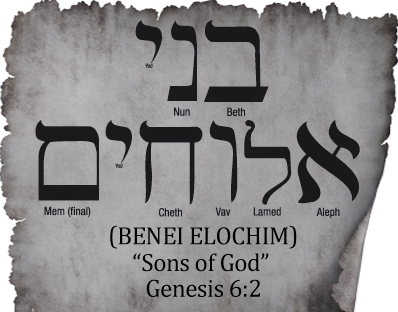
(Gen 6:2)  That the sons of God saw the daughters of men that they were fair; and they took them wives of all which they chose.
(Gen 6:3)  And the LORD said, My spirit shall not always strive with man, for that he also is flesh: yet his days shall be an hundred and twenty years.
(Gen 6:4)  There were giants in the earth in those days; and also after that, when the sons of God came in unto the daughters of men, and they bare children to them, the same became mighty men which were of old, men of renown.

Now I’m going to put down my anchor for a moment. This passage is one of those “strange” sounding scriptures. It really stands out from the others in the chapter.

It reminds me of the time I first read Genesis chapter five.

“..and so and so begat so and so and he lived for a long time and he died.”

One generation after another generation, then out of nowhere you read this “And Enoch walked with God: and he was not; for God took him.”

What?

Whether you understand what just happened or not, the statement seems out of place. You want to look at it deeper. It’s the same with chapter six. So let me analyze this more. In chapter six You have the following characters:

  • sons of God
  • daughters of men
  • Noah
  • Noah’s three sons
  • others

But I have questions that the context may or may not answer.

Question:

  • Who are these “sons”? and why are they called “sons of God”?
  • If they are ordinary men, then why wouldn’t they be called “sons of men”? I mean the females aren’t called “daughters of God”. Again, I’m speaking as one who is just reading through the Old Testament. I haven’t gotten to the New Testament yet. Though I have not read the New Testament yet (bear with me for a few minutes) there are countless multitudes of OT saints who have not either. Wonder how they were able to understand these passages? (More to come).
  • Why isn’t Noah ever referred to as a son? God even calls him a “just” man and “perfect”.
  • Why aren’t Noah’s sons called God’s sons? They did marry daughters of men, right?

Now stop for a moment and contemplate what was just stated. No Man of God was ever called a son of God in the OT. Ever! Look through each book of the prophets. If God referred to them as a son, at all, it was “son of man”; Ps 8:4;Ezek 2:1,3,6;2:8;Dan 8:17.

And then we are told that Giants were born to these “daughters of men” after the “sons of God” came in unto them. How do I know that? Look at the verse closer:

There were giants in the earth in those days; and also after that, when the sons of God came in unto the daughters of men, and they bare children to them, the same became mighty men which were of old, men of renown.

Isn’t it interesting that the Holy Spirit placed this information about “boy meets girl and boy and girl get married and have children” right in the MIDDLE of giants and men of renown? It’s as if the middle phrase is connecting the two.

Now I don’t know how big the giants were, mainly because I haven’t gotten to the verses about post-flood giants yet (if post-flood giants are the cursed sons of Ham, where did the pre-flood come from?), but I hear some folks say that they were big. It could be that everyone was bigger back then: They certainly lived a lot longer, so not out of the question. But the fact that giants are listed as such tells me that they were distinct from other “big men”, if indeed, people were taller back then.

It looks like I will have to “pull up” anchor and continue through the OT to try and find out who these “sons” are. As strange as the context of Genesis six seems, maybe there is a clearer answer. Next stop Job.

Job 1:6  Now there was a day when the sons of God came to present themselves before the LORD, and Satan came also among them.
Job 2:1  Again there was a day when the sons of God came to present themselves before the LORD, and Satan came also among them to present himself before the LORD.

Now what makes these “sons of God” interesting is that they are presenting themselves before God along with Satan. Now Satan is a bad guy so the question I have is “Why would he be presenting “himself” to God along with these others”? The chapter 2:1 verse makes it clear that Satan is “presenting” himself. Can the “sons” see him? They don’t say anything to him if they do. We aren’t exactly told one way or the other. Can we assume that they can see him? The only way the “sons” could see him is if they too were spiritual beings.

Job 38:7  When the morning stars sang together, and all the sons of God shouted for joy?

I have a question for the older, more mature believers.

As a young Christian who is working his way through the bible, is it against scriptural interpretation to accept an explanation of a question I have, about a subject or character, from the same book?

 Let me ask it this way.

Is it ok to assume that anywhere I see the phrase “sons of God” in the book of Job I can use the definition given in the same book? If the context in chapter 2 is not perfectly clear about who these sons are then shouldn’t I use the meaning in chapter 38?

If I can then I have my answer!

There is no doubt that the “sons of God” in 38 are anything other than spiritual beings because in the context (I’ve been told by more mature folks that context is important and the context, to me, seems to be creation) God had just laid the foundation of the earth; verse 4, when the morning stars and sons of God shouted for joy. Man hadn’t even been created yet (especially if this was the initial pre adamic earth).

Now if I go with this interpretation then I think I have a foundation as to what these “sons of God” were doing when they were presenting themselves, along with Satan, before God. If they truly were angels, or morning stars.

Ok wait! Are angels called “morning stars” or “sons” elsewhere in the Old Testament? This is important because I don’t want to assume this important point.

Isa 14:12  How art thou fallen from heaven, O Lucifer, son of the morning! how art thou cut down to the ground, which didst weaken the nations! 

If Lucifer was a son, then who was his father? There are only three options I can think of.

  • Man
  • Angel
  • Jesus/God

Lucifer was called “son of the morning”. How can the “morning” be a father? When I think of “morning” I think of watching sunrises over the eastern sky; the smell of ham and eggs on the stove, and enjoying coffee. I don’t think of “morning” being a person. But I do see, in the scripture, things like “Love”, and “Truth”, and “Life” being a person. Could “morning” be a person as well?

 I’m really trying to reason this out. Lucifer, before he fell, was called a son. Obviously, he isn’t called a son now, he “musta” lost his sonship and above this he was never, ever called a Son, with a capital “s”.

As a matter of fact only one person, that I’m aware of is called the Son. Now before moving into the NT what were the “sons of God” doing in Job when presenting themselves? It is totally conceivable that “angels” would have to present themselves on occasion to God. Even Satan had to do that.

(Psa 82:1)  A Psalm of Asaph. God standeth in the congregation of the mighty; he judgeth among the gods.
(Psa 82:2)  How long will ye judge unjustly, and accept the persons of the wicked? Selah.
(Psa 82:3)  Defend the poor and fatherless: do justice to the afflicted and needy.
(Psa 82:4)  Deliver the poor and needy: rid them out of the hand of the wicked.
(Psa 82:5)  They know not, neither will they understand; they walk on in darkness: all the foundations of the earth are out of course.
(Psa 82:6)  I have said, Ye are gods; and all of you are children of the most High.
(Psa 82:7)  But ye shall die like men, and fall like one of the princes.
(Psa 82:8)  Arise, O God, judge the earth: for thou shalt inherit all nations.

Are angels or spiritual beings also called gods [little ‘g’]?

1Sa 28:13  And the king said unto her, Be not afraid: for what sawest thou? And the woman said unto Saul, I saw gods ascending out of the earth.

Is this one of those times, in Job, that the “sons of God” were presenting themselves? I believe so and God is making it clear that He was not pleased by their actions. They were in danger of judgment! Just as a father would tell his children to “straighten up!”, God in His love for his creation, is giving fair warning.

But the argument presented by others are that angels have nothing to do with “Deliver the poor and needy” or “do justice to the afflicted and needy”. Therefore, this can’t be spirits or angels. Does not the scripture call angels ministering spirits? Are not spirits taking part in judgment in our present evil age?

Dan 4:17 This matter is by the decree of the watchers, and the demand by the word of the holy ones: to the intent that the living may know that the most High ruleth in the kingdom of men, and giveth it to whomsoever he will, and setteth up over it the basest of men. 
Dan 10:20 Then said he, Knowest thou wherefore I come unto thee? and now will I return to fight with the prince of Persia: and when I am gone forth, lo, the prince of Grecia shall come. 21 But I will shew thee that which is noted in the scripture of truth: and there is none that holdeth with me in these things, but Michael your prince. 11:1 Also I in the first year of Darius the Mede, even I, stood to confirm and to strengthen him.

I can’t even contemplate how much the angels (Holy and Unholy) effect the earth and her inhabitants by their involvement. Even now this present world has been put in subjection to higher entities. [See Heb 2:5]

 What if they decide to disobey God and not fulfill their duty? It’s happened before. Or have all the angels that would rebel against God rebelled by now? Is there no future rebellion? What meaneth this verse?

Rev 12:4 And his tail drew the third part of the stars of heaven and did cast them to the earth...

Is this version an historical event or is it not future? Is this not a future fulfillment of John 12?

Joh 12:31 Now is the judgment of this world: now shall the prince of this world be cast out.

Now when we move into the New Testament, we see the “sons of God”. Actually, it is in the New Testament that we learn that Adam is called God’s son.

Luk 3:38  Which was the son of Enos, which was the son of Seth, which was the son of Adam, which was the son of God

The context of chapter three is a list of fathers and their sons. It makes sense that God would be Adam’s father.

In the NT the term “son of God” always refers to men. But not just any man. Men that have experienced the new birth. A birth not made through human intervention or natural, earthly processes. A supernatural creation.

John 3:3-7; A new creature; 2 Cor 5:17; Gal 6:15.

Come to think of it, sort of like angels. Angels have no earthly origin. They were created without a mother: They, like Adam, and twice born men, have a heavenly Father but no mother.

Now the case against such an idea as this state that men have the “power” to become “sons of God” but not all born again believers are sons. That is partly true. Actually, it is fully true but some teachers don’t see the division that the scripture speaks so much about; 2 Tim 2:15

The moment you believe and are born again you are a “son of God”.

Gal4:6 And because ye are sons, God hath sent forth the Spirit of his Son into your hearts, crying, Abba, Father.
Php2:15 That ye may be blameless and harmless, the sons of God, without rebuke, in the midst of a crooked and perverse nation, among whom ye shine as lights in the world;
1Jn3:1 Behold, what manner of love the Father hath bestowed upon us, that we should be called the sons of God: therefore the world knoweth us not, because it knew him not.
1Jn3:2 Beloved, now are we the sons of God, and it doth not yet appear what we shall be: but we know that, when he shall appear, we shall be like him; for we shall see him as he is.

In a sense we are all first-born sons, but many will sell their birth-right and forfeit their inheritance. Sonship is the same in regard to our future reward. We are born sons but there is a dual application because the scripture also makes it clear that there is a sonship that is conditional and future.

Mat5:9 Blessed are the peacemakers: for they shall be called the children of God.

Another way to try and grasp this concept would be that  the “first born inheritance” is ours to lose. As some teachers have rightly written about dual sonship, I won’t spend any more time on that other than to include verses for the benefit of the reader. Romans 8:14-19

I could go on about the duel meaning of being a son of God for the descendants of Adam but for me the evidence is clear that the term “son[s] of God” refers to that which is born of the Spirit. Whether angels or sons of Adam, it is a supernatural experience that can only happen by the working of the Holy Spirit.

Fellowship With Christ

Taken from G.H.Lang’s Ideas and Realities

It is but of the nature of things that a follower must tread the same path as the guide if he would reach the same goal, that a soldier must brave his captain’s conflicts if he would share his triumph, that a maiden must suffer with a rejected lover-prince if she would share his home and throne.

The ground of the glorifying of the Son of man is His fidelity to His God while in the path of trial and the conflicts of the kingdom on earth: Isa. 53:12, “Therefore will I divide him a portion with the great because he poured out his soul unto death”: Phil. 2 : 9, “wherefore also God highly exalted him” because “he humbled himself, becoming obedient unto death”: Heb. 2 : 9, “we behold Jesus because of the suffering of death crowned with glory and honour”: Rev. 5 :9, Worthy art thou . . . for thou wast slain.”

To such words every believing heart says adoringly, Amen! But why does not every believer give an equally ready Amen! to such parallel words as these: Matt. 16:25, Whosoever would save his life (for him self) shall lose it: and whosoever shall lose his life for My sake shall find it”: Luke 14.11, “everyone that exalteth himself shall be humbled; and he that humbleth himself shall be exalted: Rom. 8: 17, “joint-heirs with Messiah if so be that we suffer with him that we may be also glorified with him”: 2 Tim. 2: 11, “if we died with him we shall also live with him; if we endure we shall also reign with him; if we deny him he also will deny us”? This last is as distinctly called a ” faithful saying” as is 1 Tim. 1: 15 ” Christ Jesus came into the world to save sinners,” and it will prove to be so whether the christian faces it or shrinks from it. The love of God imposes no arbitrary conditions, but such only as arise from the nature of the case and are always for our good and possible of fulfilment. Therefore they cannot be waived. And if Jesus on the cross masters the affections, and if Christ on the throne enthralls our gaze, and if His coming kingdom fills the future, then the heart will find joy in sharing His afflictions and will be fortified to endure unto the end.

Thus, but not otherwise, shall be fulfilled, to His joy and to ours, the promise, “He that conquereth, I will give to him to sit down with me in my throne, as I also conquered, and sat down with my Father in His throne” (Rev. 3:21); thus, but not otherwise, shall His wife make herself ready for the marriage with the Lamb (Rev. 19 : 7, 8); thus – and do thou, my soul, take it personally to thy heart – thus, but not otherwise, shalt thou reach this supreme felicity that:

“He and I in that bright glory
One great joy shall share,
Mine to be for ever with Him,
His that I am there.”

“Now the God of peace, who brought again from the dead the great shepherd of the sheep in the (power of the) blood of the eternal covenant, even our Lord Jesus Christ, make you perfect in every good thing to do his will, working in us that which is well-pleasing in his sight through Jesus Christ; to whom be the glory for ever and ever. Amen. But I beseech you, brethren, bear with the word of exhortation, for it is but in few words that I have written unto you” (Heb. 13: 20-22).

Pharisees Pt 4: 10 Signs You Might Be a Pharisee: Winning the Battle But . . .!

Pharisees Pt 4:

Pharisees Pt 1

Pharisees Pt 2

Pharisees Pt 3

12 Signs You Might Be a Pharisee: Winning the Battle But . . .!

There are some folks you can’t defeat in a debate. . . ever . . . whether you are right or wrong! I am reminded of the idiom, “He could sell ice cubes to Eskimos.” (I hope that’s not too terribly “PC”)  But it does explain how some are much more persuasive than others.  Some influential Pharisees got the “Debate Gene”.

 I remember when I was in 7th grade in Texas History class.  The teacher wanted us to explore the battle for Texas independence from several perspectives.  One of the things we had to do was debate whether or not general Santa Anna should be tried for war crimes.  Now we all HATED Santa Anna.  After all he killed John Wayne!!! (Well . . . in the movie he did.) But I was chosen to be on the side that defended Santa Anna.  Man! I was angry!  How could the teacher expect ME the biggest Santa Anna hater of all to defend him?!? Well I finally gave in and we set off to study the issues.  And something strange happened.  WE LEARNED!!! My side won the debate.  Now I’m still not a big fan of Santa Anna (John Wayne Killer!—Remember the Alamo!  Remember Goliad!)   . . . ahem.

But I do know how to win a debate. I am good at it.  It is fun-fun-fun for me! I know lots of tricks.  

Matthew gives us some insight as to how the Pharisee’s mind works

Matthew 22:15 Then went the Pharisees, and took counsel how they might entangle him in his talk.

8)     You might be a Pharisee if you are more interested in winning the argument than winning the person.

These Pharisees in Matt 22 were skilled debaters. This is a necessary skill if you re to keep questions to a minimum.  The truth becomes, in a Pharisee’s mind, the winning of a debate. Some folks aren’t good at it and will not even bother because they know that they can’t say anything skillfully enough to “win”. 

This came to light in a devastatingly powerful manner, one evening when I was on a Christian Message board online.  I was debating and as usual I was using my wit and sarcasm to “make my point”.  I was startled by a voice from behind me.  “Ooooh BURN!!!” It was my teenage son.  He thought it was cool that I was crushing my opponent and making him feel stupid. Man did I have some ‘splainin-to-do-Lucy!  I tried to explain to my son that I wasn’t trying to “burn” the other person; that I was trying (in a godly manner) to help him by pointing out his error.  He accepted that explanation but it was too late for me.  God had made His point.  I was trying to “burn” the guy.  It gave me a sense of control, of importance, of worth to be able to calmly shred a person’s arguments.  But did I make a friend?  Did God enter into a new depth of relationship through me with the other person? Did the man’s position change?  Did his heart change?  Was he so awed by my deft debating that he fell on his knees and repented? No. No. No. No. And  . . .let’s see . . . uh no. 

A family member (now deceased) who was a life long preacher once gave me some advice.  He said, “Win them to yourself first, then you can win them to Jesus, because you are the incarnational representation of Jesus on Earth right now.” I cannot make a man repent.  I can’t make him believe anything.  But I can control my attitude when dealing with the man. If I have no relationship with a person, or a strained relationship, I cannot win the man.  The Bible says “He that winneth SOULS is wise.” (Interesting word choice.)  It’s the area of the soul where I can “win the man.”  The spirit is God’s department.  I have seen food, music, sharing a book, sharing a trial, sharing your pain, meeting a need, or even just a simple kind word in due season, do, in a second, what a million years of winning debates could never do!

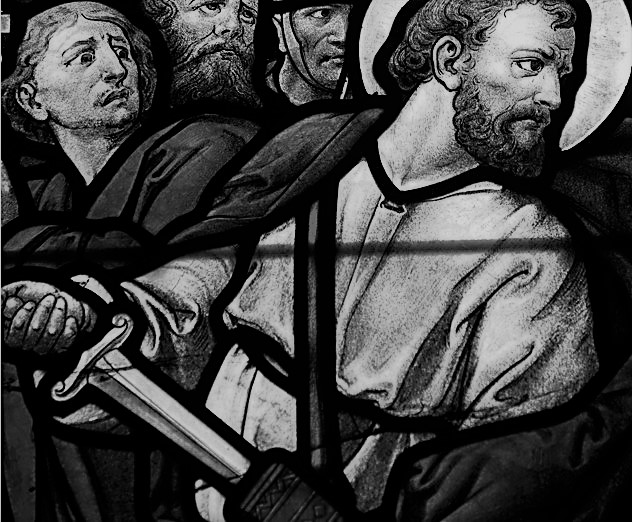
The Pharisee wanted to entangle Jesus in his talk, wanted to win the debate. Peter proved that a sword can be used to cut off a man’s ear.  If you use the mighty sword of God’s word in that manner, don’t be surprised when the injured person doesn’t listen to you. 

Oh yeah, and one more thing about Santa Anna.  I learned from defending him that the truth is not always so black and white. Sometimes it’s multi faceted.  Sometimes it’s messy and uncomfortable. Like us.

Pharisees Pt 3: 10 Signs You Might Be a Pharisee: The BUN RULE!

Pharisees Pt 3:

Pharisees Pt 1

Pharisees Pt 2

12 Signs You Might Be a Pharisee: The BUN RULE!

I have a good friend who won’t mind me sharing this story. She used to attend a church with a great list of extra rules and regulations.  And she was the queen of the Pharisees!  She was CODE baby!  She dressed correctly, acted correctly, talked (or didn’t talk) correctly, ate the right stuff, everything!  She was a model citizen.  But one day she noticed a group of ladies shopping at the same (group approved) grocery store where she was shopping. These ladies were dressed very similarly to her. They seemed to be in code too. So she approached ham and introduced herself. After offering up some condescending looks, laced with perhaps a little pity, these women physically turned their backs to her and shunned her.  She was shocked. She was “perfect, righteous and holy” in her own circles.  What was it that caused these women to feel that my friend was not worthy of their “acknowledgement”?  She labored over that question for a night or two. Why?  What about me was not good enough?

Then it dawned on her!  It was the buns! They had a “BUN RULE!”  My friend had (unwittingly) wandered into a pack or Pharisees who deemed her shameless and lewd for having her hair down and not in a bun.  Other than that her appearance was almost exactly the same.  She had no idea about the “bun rule” and they failed to explain that one “major” detail. (Gnat! -*cough*)  I know for a fact they missed out because this woman is very gifted and has a very edifying testimony, but they just couldn’t stand her bunlessness!  She had met Pharisees that could “out Pharisee” her!

She was troubled because it hurt her feelings to be shunned, and perhaps to be thought of as less than “holy”. So after agonizing about it and it dawned on her!  “That is exactly how I make anyone feel who doesn’t keep my code,” is what she concluded! 

7)     You might be a Pharisee if: You are not submitted to, accountable to, or interested in interacting with in a meaningful way, any of Christ’s followers who don’t conform to the group code.

I used to define myself as “independent”. What a clumsy brand. I do believe that individual churches should be autonomous.  But there is a certain elitist arrogance I struggled with for years. (Still struggle some, I suppose.) The most edifying fellowship I had the whole time I was pastoring an Independent Baptist Church was with a man outside the “circle”.  He was CHURCH OF CHRIST!!!  We had a whole list of condescending nicknames for those folks. But I noticed him smiling across the Barnes and Nobles.  His hair was “too long” (so I hoped no one would see me talking to him) but I was drawn by his smile like a moth to the flame. He ministered the love and grace of God and radiated sheer child like joy.  I was dumbfounded. He was not “code”.

I never saw him again. Maybe he was an angel.  We talked, prayed, and cried for two hours right there standing in the bookstore. I never forgot him.

This “Cambellite” had the incarnational Christianity my heart was longing for. I realized then that God’s children are His business! All His children are gifted, and their gifts are not just a nice luxury that I might at my convenience take advantage of.  THEY ARE ESSENTIAL FOR MY EDIFICATION AND ORGANIC GROWTH.

I am not “independent” anymore.  I am hopelessly INTERDEPENDENT!  I can’t love my Lord and not love His people.  How do I dare judge another Man’s servant?  How do I assume that God is not at work in his life at every stage of the journey?  I’ve belittled men with long hair, only months after I cut my own hair, as if God is patient with me but no one else.  I have sarcastically railed on folks who used a different version of the Bible without ever taking the time to patiently explain my position,  It’s all about attitude.

What is your attitude toward folks without buns?

(Part 4 coming!)